When we planned a recent AI research experiment, the technical requirement was clear: a computer with enough memory and processing power to run a large model at a useful pace. Finding a suitable specification in a cloud catalogue was straightforward. Getting that machine running was harder.
In several rental attempts, the smaller management node started while the requested high-memory GPU worker remained pending. On another platform, GPU options were limited by the quota available to our account and region. We eventually ran the full model on a machine with four CPU cores and 32 GiB of memory. It worked, but processing one 1,702-token prompt took about 93 minutes before the model began generating its answer.
Our experience shows why “Can this computer run the workload?” needs a second question: “Can we get access to one now?”
A listing is not an allocation
Cloud providers offer many machine types, but a listed configuration is different from a machine ready to use. The requested GPU, memory, location and supporting infrastructure all have to line up. A customer may have permission to request a machine while the physical capacity for that exact configuration is unavailable in the chosen region.
Microsoft’s capacity guidance draws this distinction clearly: quota limits what an account may request, while capacity is the physical infrastructure available to fulfil it. It identifies high-demand GPU machines as a category that can be constrained even when other machine types are available.
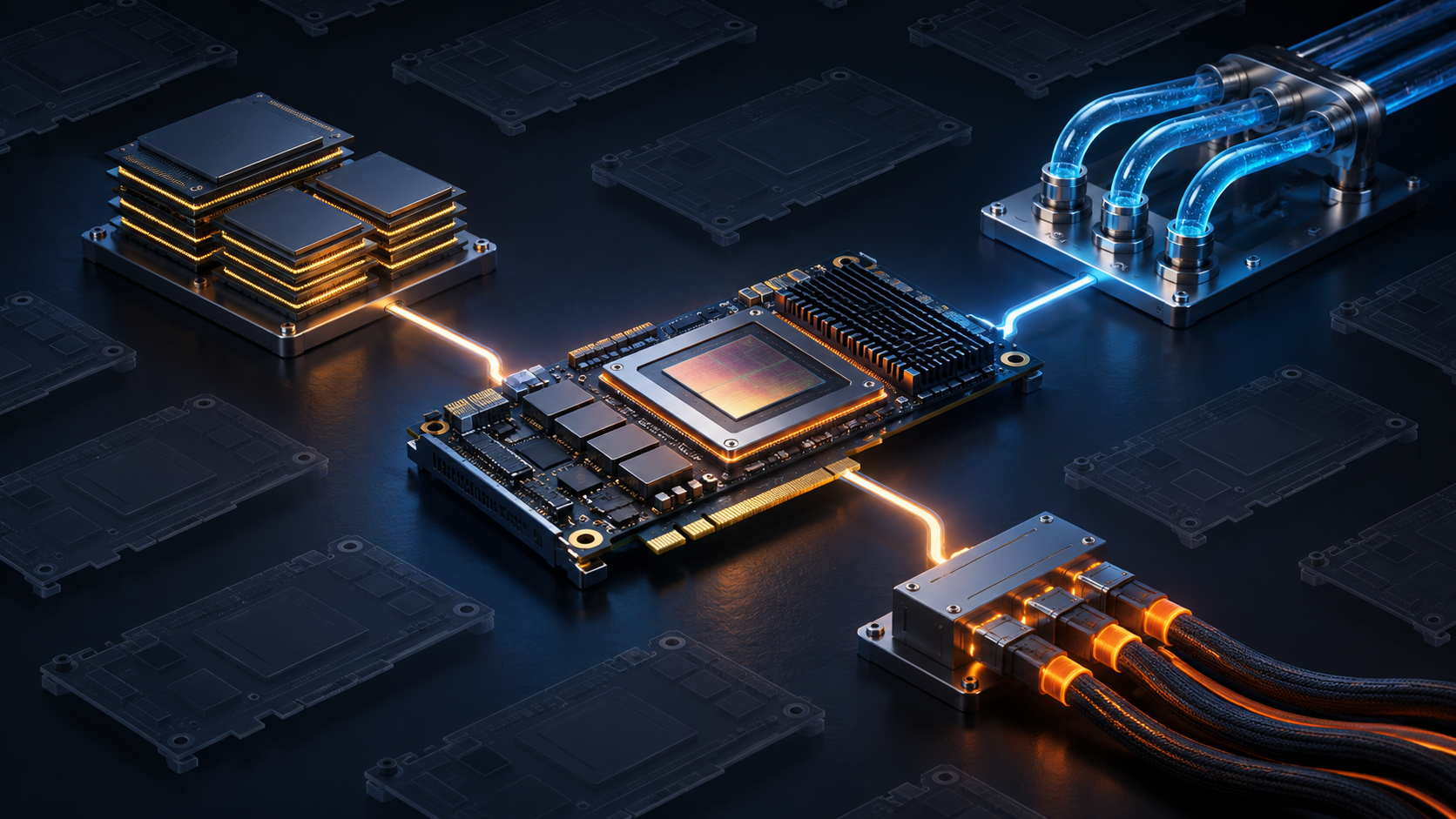
Illustration: Advanced computing depends on accelerators, memory, power and cooling being available together.
The physical buildout takes time
The hardware behind advanced computing is more than a processor. It also needs memory, packaging, testing, networking, power and cooling. These parts must be produced and installed before a provider can offer usable capacity. In October 2026, NVIDIA announced plans to expand manufacturing and testing capacity to meet demand for AI infrastructure. In its June 2026 outlook, Micron said it expected DRAM and NAND supply conditions to remain tight beyond 2027.
These industry statements show pressure on the supply chain. The cause of any individual provisioning delay requires information from the provider. The outcome visible to us was that the requested GPU computer was unavailable when we needed it.
Why access matters to research
An experiment may need to be repeated, compared with a control or run while a question is still relevant. When the required hardware cannot be allocated, the work waits or changes shape. Our CPU fallback let us continue, but it turned an interactive model test into a slow process. That difference affects how many ideas a small team can test in a day and how quickly it can check its results.
We now treat availability as part of the technical plan. Before committing to a workload, we check its memory requirement, account quota, region and whether the requested machine actually provisions. We also keep a smaller fallback where the task permits one, and record the speed difference so the result is honest. Efficient software can help make use of the hardware at hand; it cannot make every demanding workload practical on a small computer.
More powerful machines are being built. What matters to independent researchers is whether that capacity becomes reliably accessible when an experiment needs it. A computer advertised in a catalogue has little practical value until the work can start.